School teacher candidates’ mental health literacy: an exploratory experimental study
Children’s mental health is a public health issue. Teachers play a key role in identifying children’s socio-emotional and/or cognitive difficulties as well as in promoting mental health at school. However, they are not equipped to (1) understand how to promote and maintain good mental health; (2) understand mental illnesses and their treatments; (3) reduce stigma against mental illness; and (4) encourage and facilitate seeking help among children. These four dimensions correspond to the theory of mental health literacy concerning children, which is at the interface between public health, information and communication sciences, educational sciences and psychology.
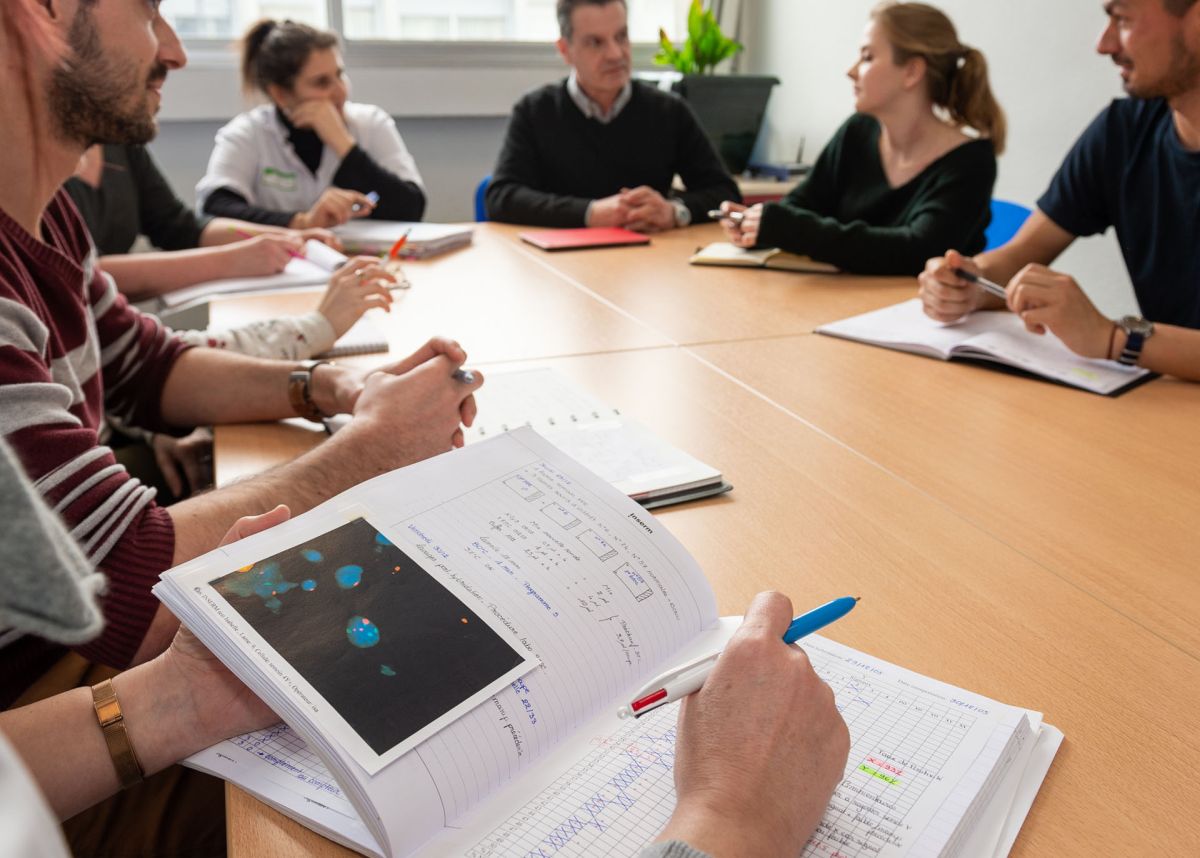
© Gautier Dufau – université de Bordeaux
The TEACH-MHE project has the dual objective of (1) developing and validating a scale that measures the mental health literacy of teacher candidates concerning children, and (2) cocreating and testing an intervention aimed at improving the mental health literacy of teacher candidates concerning children.
Based on existing measurement tools, we will develop the TEACH-MHE scale which will then be completed by students at the INSPÉ Nouvelle Aquitaine (Institute of Education, University of Bordeaux). A subgroup will answer the items twice according to the rules of psychometrics. Collected data will make it possible to statistically validate the scale. This will be the first scale in French on teachers’ mental health literacy concerning children. At the same time, through a qualitative survey (semi-structured interviews), we will collect the needs of teacher candidates with the aim to cocreate an intervention (an online course) that aims to improve their knowledge about children’s mental health. The intervention will be tested within the University of Bordeaux. This will also be the first online pilot intervention in the French-speaking world concerning teachers’ mental health literacy.
Partners: Marthe-Aline Jutand, Magali Boizumault, Stéphanie Constans, Emilie Poission, Amandine Baude
The project is funded by the University of Bordeaux (AAP RIE 2024)
Click HERE for more information in French on the website of the University of Bordeaux.

 Ilaria Montagni