
Author: ilariamontagni
Researcher Health Communication
Children’s Definitions of Mental Health: a Qualitative Content Analysis
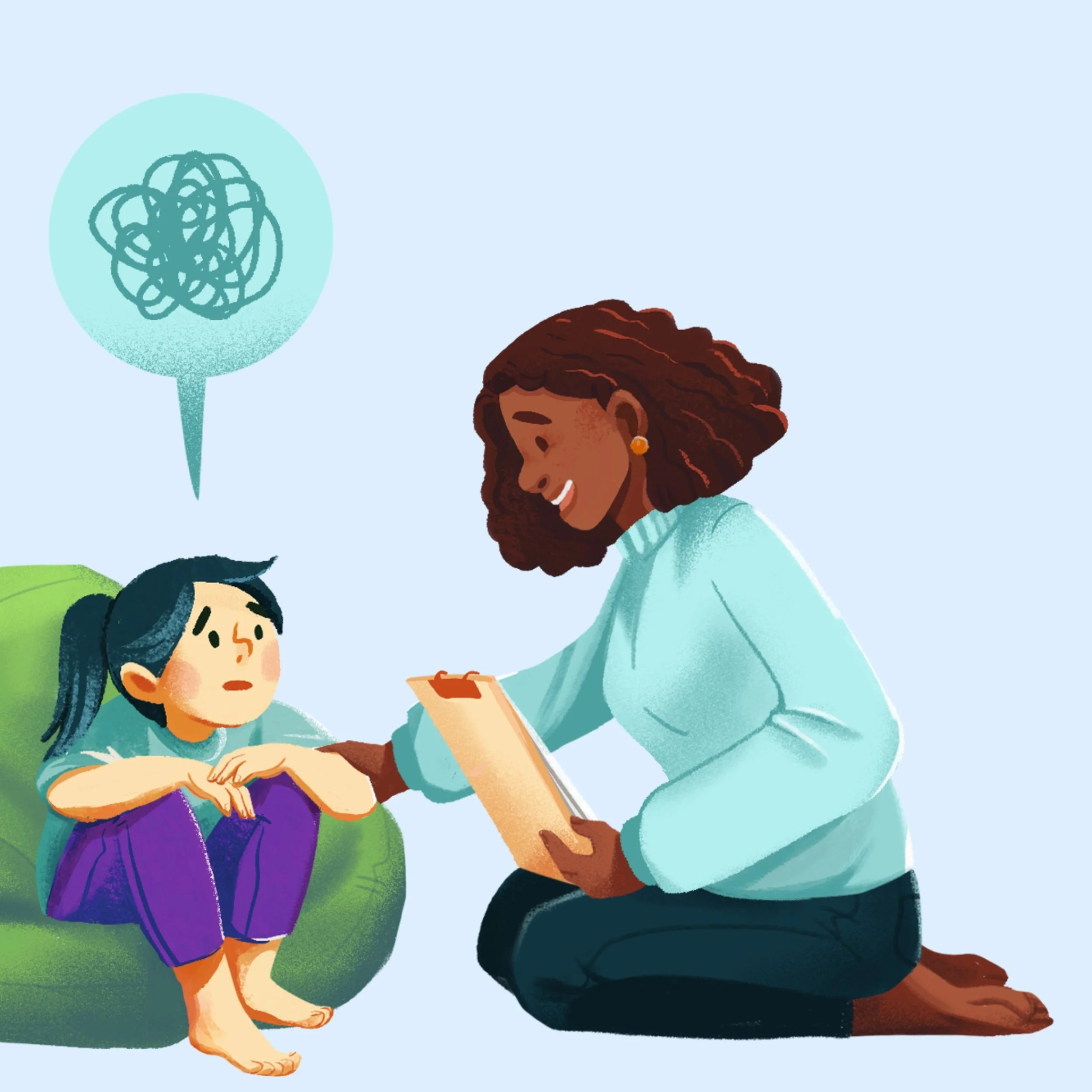
How do school-age children define “mental health”? What are their beliefs and knowledge about mental diseases and psychological well-being?
Alix Joseph de Cazanove and I carried out a field study to address these questions.
📖 The results are published in the Child Indicators Research journal Springer Nature
🧠 The majority of children wrote that mental health is the health of the brain.
⁉️ The second most frequent response was that children merely do not know what mental health is.
Link of the article: https://link.springer.com/article/10.1007/s12187-025-10296-w
Public Health Researcher @Inserm
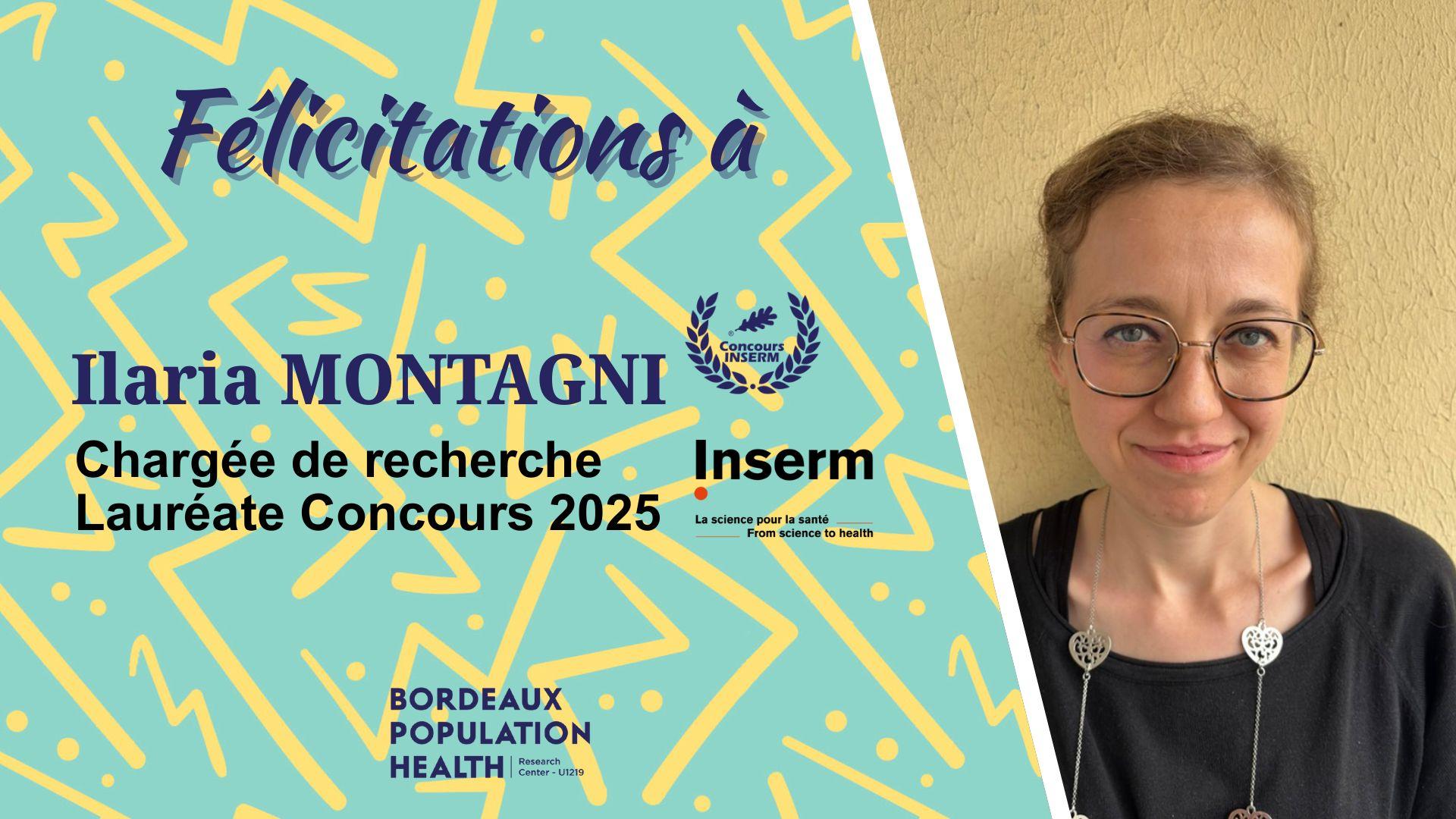
Article from the website of the Bordeaux Population Health Research Center U1219: https://www.bordeaux-population-health.center/inserm-crcn-2025-congratulations-to-ilaria-montagni/
After completing a Master’s degree in Communication Theories at the University of Florence in Italy, Ilaria Montagni obtained her Europaeus Doctorate in Psychological and Psychiatric Sciences at the World Health Organisation Collaborating Centre for Research and Training in Mental Health at the University of Verona, and at the Pierre Louis Institute of Epidemiology and Public Health at Sorbonne University. Her thesis focused on the role of Information and Communication Sciences in the field of mental health, based on quantitative and qualitative studies conducted in nine European countries.
She joined Bordeaux Population Health U1219 as a postdoctoral researcher to contribute to the i-Share study on the health of more than 20,000 students, led by Prof. Christophe Tzourio. Her skills in humanities and social sciences were essential in designing and evaluating tools aimed at promoting students’ mental well-being.
Since her PhD, her research has focused on mental health literacy, which is all about knowledge and beliefs around mental health, from how it’s defined to access to care. Ilaria Montagni describes her research as interventional and participatory, based on mixed methods.
After a contract as a lecturer-researcher at Isped for the Graduate Program in Digital Public Health, under the supervision of Rodolphe Thiebaut, Ilaria passed the Inserm CRCN competitive examination in 2025.
She will continue her research on children’s mental health literacy through the CHILD-MHL and TEACH-MHE projects, which aim to improve mental health knowledge among children and their teachers in schools. Funded by IReSP, Santé publique France, the University of Bordeaux and AUF//Collectif, these two projects involve the co-creation, between children and teachers, of a programme for elementary schools in the Bordeaux metropolitan area, as well as online training for students preparing for a career as school teachers at the University of Bordeaux. To evaluate the effectiveness of these interventions, two scales will be developed and validated according to psychometric principles.
Vidéo interactive sur la Santé Mentale des Enfants
⭐ “Être bien ensemble” ⭐ est une vidéo interactive pour sensibiliser les enfants à la nécessaire lutte contre la stigmatisation.
Grâce à un financement de Santé publique France nous avons pu réaliser un outil de prévention et de promotion de la santé mentale qui a comme objectif de faire découvrir aux enfants l’importance de l’entraide face aux difficultés psychiques.
📹 La vidéo est en ligne, et disponible en 4 langues 🇫🇷 🇮🇹 🇬🇧 🇪🇸
Réalisation : The Ink Link / Emmanuelle Perez / Audrey Mussat
Illustrations : Edith Chambon
Montage vidéo : Claire Lageyre
Voix : Alix Joseph-de Cazanove
Avec les contributions de :
Annabelle Martin
Chelsea Cuffaro / Centre of Excellence in Youth Mental Health – Douglas Mental Health University Institute
TEACH-MHE: School Teachers’ Mental Health Literacy
School teacher candidates’ mental health literacy: an exploratory experimental study
Children’s mental health is a public health issue. Teachers play a key role in identifying children’s socio-emotional and/or cognitive difficulties as well as in promoting mental health at school. However, they are not equipped to (1) understand how to promote and maintain good mental health; (2) understand mental illnesses and their treatments; (3) reduce stigma against mental illness; and (4) encourage and facilitate seeking help among children. These four dimensions correspond to the theory of mental health literacy concerning children, which is at the interface between public health, information and communication sciences, educational sciences and psychology.
© Gautier Dufau – université de Bordeaux
The TEACH-MHE project has the dual objective of (1) developing and validating a scale that measures the mental health literacy of teacher candidates concerning children, and (2) cocreating and testing an intervention aimed at improving the mental health literacy of teacher candidates concerning children.
Based on existing measurement tools, we will develop the TEACH-MHE scale which will then be completed by students at the INSPÉ Nouvelle Aquitaine (Institute of Education, University of Bordeaux). A subgroup will answer the items twice according to the rules of psychometrics. Collected data will make it possible to statistically validate the scale. This will be the first scale in French on teachers’ mental health literacy concerning children. At the same time, through a qualitative survey (semi-structured interviews), we will collect the needs of teacher candidates with the aim to cocreate an intervention (an online course) that aims to improve their knowledge about children’s mental health. The intervention will be tested within the University of Bordeaux. This will also be the first online pilot intervention in the French-speaking world concerning teachers’ mental health literacy.
Partners: Marthe-Aline Jutand, Magali Boizumault, Stéphanie Constans, Emilie Poission, Amandine Baude
The project is funded by the University of Bordeaux (AAP RIE 2024)
Click HERE for more information in French on the website of the University of Bordeaux.
Rapport sur les politiques sur la santé mentale des enfants à l’école
Pour consulter le rapport, cliquez sur RAPPORT POLITIQUES ECOLE ou Download
Rapport sur l’évaluation de la formation Premiers Secours en Santé
Pour consulter le rapport PSSM, cliquez sur RAPPORT PSSM ou Download
Manuel Promouvoir le bien-être et la santé mentale à l’école
Échelle Littératie en Santé Mentale des Enfants
Pour consulter le questionnaire, cliquez sur ÉCHELLE ou Download
Le livret sur la santé mentale des enfants
Pour consulter le livret, cliquez sur LIVRET ENFANTS ou Download
 Ilaria Montagni