TEACH-MHE: School Teachers’ Mental Health Literacy

School teacher candidates’ mental health literacy: an exploratory experimental study

Children’s mental health is a public health issue. Teachers play a key role in identifying children’s socio-emotional and/or cognitive difficulties as well as in promoting mental health at school. However, they are not equipped to (1) understand how to promote and maintain good mental health; (2) understand mental illnesses and their treatments; (3) reduce stigma against mental illness; and (4) encourage and facilitate seeking help among children. These four dimensions correspond to the theory of mental health literacy concerning children, which is at the interface between public health, information and communication sciences, educational sciences and psychology.
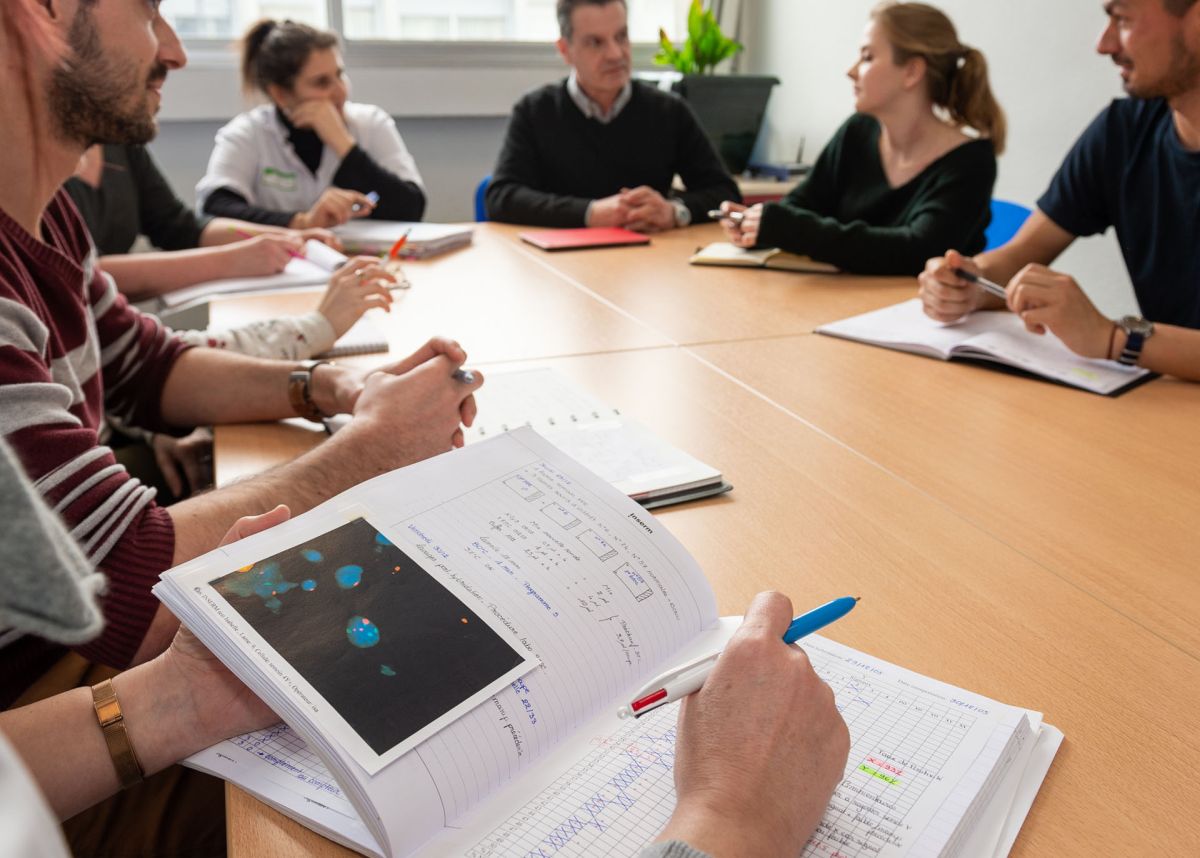
© Gautier Dufau – université de Bordeaux

The TEACH-MHE project has the dual objective of (1) developing and validating a scale that measures the mental health literacy of teacher candidates concerning children, and (2) cocreating and testing an intervention aimed at improving the mental health literacy of teacher candidates concerning children.

Based on existing measurement tools, we will develop the TEACH-MHE scale which will then be completed by students at the INSPÉ Nouvelle Aquitaine (Institute of Education, University of Bordeaux). A subgroup will answer the items twice according to the rules of psychometrics. Collected data will make it possible to statistically validate the scale. This will be the first scale in French on teachers’ mental health literacy concerning children. At the same time, through a qualitative survey (semi-structured interviews), we will collect the needs of teacher candidates with the aim to cocreate an intervention (an online course) that aims to improve their knowledge about children’s mental health. The intervention will be tested within the University of Bordeaux. This will also be the first online pilot intervention in the French-speaking world concerning teachers’ mental health literacy.

Partners: Marthe-Aline Jutand, Magali Boizumault, Stéphanie Constans, Emilie Poission, Amandine Baude

The project is funded by the University of Bordeaux (AAP RIE 2024)

Click HERE for more information in French on the website of the University of Bordeaux.

The CHILD-MHL project: cocreation of an intervention and measurement of children’s mental health literacy

Children’s mental health is a public health priority. Figures are alarming: in Europe, 1 child in 5 under the age of 12 suffers from a behavioral, developmental or psychological disorder. This number continues to increase, especially after the Covid-19 pandemic.

Mental health literacy (MHL) is a modifiable determinant of mental health. The “Child Focused Mental Health Literacy Model” describes the six dimensions of MHL in children: (1) understanding of mental health and recognition of its fluctuations; (2) help-seeking actions; (3) supports available; (4) influences on mental health; (5) coping and resilience; and (6) stigma.

Promoting children’s MHL means enabling them to better recognize a mental health problem, to seek help in a timely manner and to learn how to take care of their mental health. Very few interventions exist to promote MHL in children. Moreover, these interventions have not been evaluated using a rigorous design. Furthermore, a validated scale measuring children’s MHL does not exist.

First tools: Le Jardin du Dedans® and the Handbook Promoting Mental Health and Wellbeing in Primary Schools

PROMOTOR: Bordeaux Population Health U1219, Université de Bordeaux

PARTNERS: Psycom, The Ink Link, McGill University/Douglas Institute, Observatoire du Bien-être à l’Ecole/Université Lumière Lyon 2, Institut de Santé Globale/Université de Genève, Monash University, Universidad de Cádiz

Published protocol: https://www.researchprotocols.org/2023/1/e51096

Ta santé à la carte en ligne !

Après les résultats très positifs de l’évaluation scientifique du projet, la carte interactive qui montre les services de santé à petit coût et avec le tiers payant sur la métropole bordelaise est enfin en ligne et accessible à tous.

Merci à Bordeaux Métropole et à tous nos partenaires pour le soutien.

Réalisation : Pixels Codex

Visitez ta santé à la carte : https://tasantecarte.fr/

Merci @ElenaMilesi

Les articles scientifiques associés au projet :

Littératie digitale en santé mentale : une nouvelle publication

136-les_etudiants_internet_et_la_sante_mentale_714_1Les technologies de l’information et de la communication (TIC) font partie intégrante de la vie quotidienne des jeunes adultes et particulièrement des étudiants inscrits dans l’enseignement supérieur qui les utilisent largement dans le cadre de leurs études.

En France, la quasi-totalité des 15-30 ans sont des internautes et la moitié d’entre eux ont utilisé Internet au moins une fois dans les douze derniers mois pour rechercher des informations ou des conseils sur la santé en général. Cependant, peu d’études ont porté sur les motivations, les compétences et l’utilisation d’Internet concernant les informations sur la santé mentale chez les étudiants.

Ainsi, nous avons réalisé l’étude Se-SaMe-Jeunes avec l’objectif d’examiner comment les étudiants accèdent, comprennent, évaluent et appliquent l’information en santé mentale via les TIC. Dans le cadre de la littératie digitale en santé mentale, nous avons effectué une recherche exploratoire de type qualitatif auprès d’étudiants de l’université de Bordeaux pendant l’année universitaire 2017/2018.

L’analyse de 21 entretiens semi-directifs a permis de relever que les étudiants ne savent pas réellement où s’orienter pour se renseigner en ligne sur la santé mentale. Bien qu’accoutumés aux nouvelles technologies, ils se méfient beaucoup de la qualité des informations trouvées sur Internet et jugent les sites officiels de santé trop complexes.

Dans le but ultime d’améliorer le bien-être psychique des étudiants, il devient donc nécessaire de développer leur littératie digitale de santé mentale en proposant des formations et des outils numériques de qualité au sein des campus universitaires.

Source :

Montagni I, Capelle A, Chalifour C, Langlois E . Rechercher et s’approprier l’information en santé mentale sur Internet : une étude qualitative auprès d’étudiants. Revue française des sciences de l’information et de la communication, 2019 jan 1;(15).

Design Thinking: does it work in research?

Two new publications from my research activities at the Bordeaux Population Health research center. Participatory research approaches and co-creation are in the limelight. Is design thinking good or bad for researchers and study participants?

1. Montagni I (2018). Does design thinking really work? Views on co-creation practices in research, XXI Congrès de la SFSIC « Création, Créativité et Médiations », Paris (France), 13-15 Juin 2018.

2. Montagni I, Koman J, Lhomme E, Tzourio C, The Sécupliqué Team (2018). Efficacy of an online video to promote health insurance literacy among students. ESSACHESS – Journal for Communication Studies, vol 11, n 1(21): 29-48.

design_thinking

First article from the Se-SaMe-Jeunes project

9131-180450-1-SPSe-SaMe-Jeunes (Services et e-Santé Mentale des Jeunes / Services and eHealth for young people’s mental health) is a mixed-methods research project aimed to understand the current digital health use and expectations of students to implement effective digital health strategies addressed to them.
This project was financed by IReSP (Institut de Recherche en Santé Publique-Research Institute in Public Health), call “Services de Santé-Health Services,” 2016.

We collected quantitative data from 507 university students in the city of Bordeaux, France, and are transcribing about 25 semi-structured interviews.

The first article from Se-SaMe-Jeunes has been published in JMIR mHealth and uHealth, and concerns the quantitative face-to-face questionnaire.

We found that university students are largely using the internet for health information seeking, but using less mobile health apps and very few wearable devices. Our data suggest that digital health has the potential for improving health and well-being at the university, especially if digital health interventions take into account students’ profiles, interests, and needs.


Digital Public Health – Graduate Program

logo

The Digital Public Health Graduate Program, directed by Pr. Rodolphe Thiébaut, is a project conceived by the Bordeaux Population Health research center (BPH) and the Bordeaux School of Public Health (ISPED) and awarded by the third French Program on Investments for the Future (Programme d’Investissements d’Avenir, PIA3). The project relies on numerous academic and industrial partners concerned by digital health, and is open for international collaborations.

The Digital Public Health Graduate Program includes the creation of a new Master of Science (MSc) embedded in the Master programmes of ISPED, a Doctoral Program (PhD) open to students from all disciplines, and a novel professional certification (DU) program on connected devices and e-Health which responds to needs of capacity building in the field as articulated by regional and international private companies.

The teaching programs are built on the digital innovation brought by big data and connected devices for public health, as well as on the enormous current need to train students and staff in this emerging domain through a modular and multidisciplinary teaching approach. Innovative training methodologies based on real-life projects and data-centered seminars are employed to foster collaborative problem solving, project management and dissemination skills. All courses are delivered in English.

Given the international influence of the researches undertaken at BPH and of the innovative teaching vision of the ISPED, the Digital Public Health Graduate Program has the potential to turn into an international leader center on training and research in the field of digital public health. Graduates from this program will be highly employable data chief officers and future experts and leaders of the digital public health domain.

Key scientific fields: Public Health; Epidemiology; Biostatistics; Digital and IT Sciences; Humanities

Current Executive Board

    • Rodolphe THIEBAUT – Head, Scientific Director
    • Christophe TZOURIO –  Co-Head, Partnership Officer
    • Ilaria MONTAGNI – Operational Manager
    • Carole DUFOUIL – International Relations Coordinator
    • Ahmadou ALIOUM – Academic Officer
    • Eugénie DESTANDAU – Head of Communication
    • Sandrine DARMIGNY – Administrative Assistant


The servi-Share project: first published article

Bordeaux, February 2017

figure-2

I won in December 2015 a 50K euros project for the creation of a smartphone application geolocalising students health facilities in Bordeaux (project “servi-Share”).
Nested in the i-Share cohort its aim was to implement a web-based intervention aimed to facilitate students’ access to real-world healthcare services. The production of the web-application consisted of two main processes: co-creation and process evaluation involving academic staff, industry web-developers and two target stakeholder groups, i.e. university students and real-world healthcare services providers. The study used mixed qualitative and quantitative methods.
servi-Share was funded by AVIESAN, ITMO Santé Publique, ITMO Nouvelles technologies pour la santé, Call on “Objets connectés”.
Duration: 1 January 2016 to 31 December 2016.

The first article on this project is available! Here it is on Research Protocols JMIR

Special thanks to deux degrés (Mathieu, Thomas and Cyril) and my wonderful stagiaires Jason Koman, Margaux Petropoulos, Mélodie Garcès et Béatrice Famin.

MOOC PoP-HealtH : inscriptions ouvertes !

Diapositive1.jpg

Un très grand travail derrière la réalisation de mon premier MOOC sous le guide de Marthe-Aline Jutand, Marianne Savès et Mélanie Le Goff.

En 6 semaines le MOOC PoP-HealtH, «Enquêter sur la santé : comment ça marche ?» va vous permettre de comprendre comment sont construites les enquêtes.

Community manager du MOOC, je suis surtout responsable de tous les contenus pédagogiques concernant la communication en santé.

Début le 31 janvier 2017. Les inscriptions sont déjà ouvertes !